

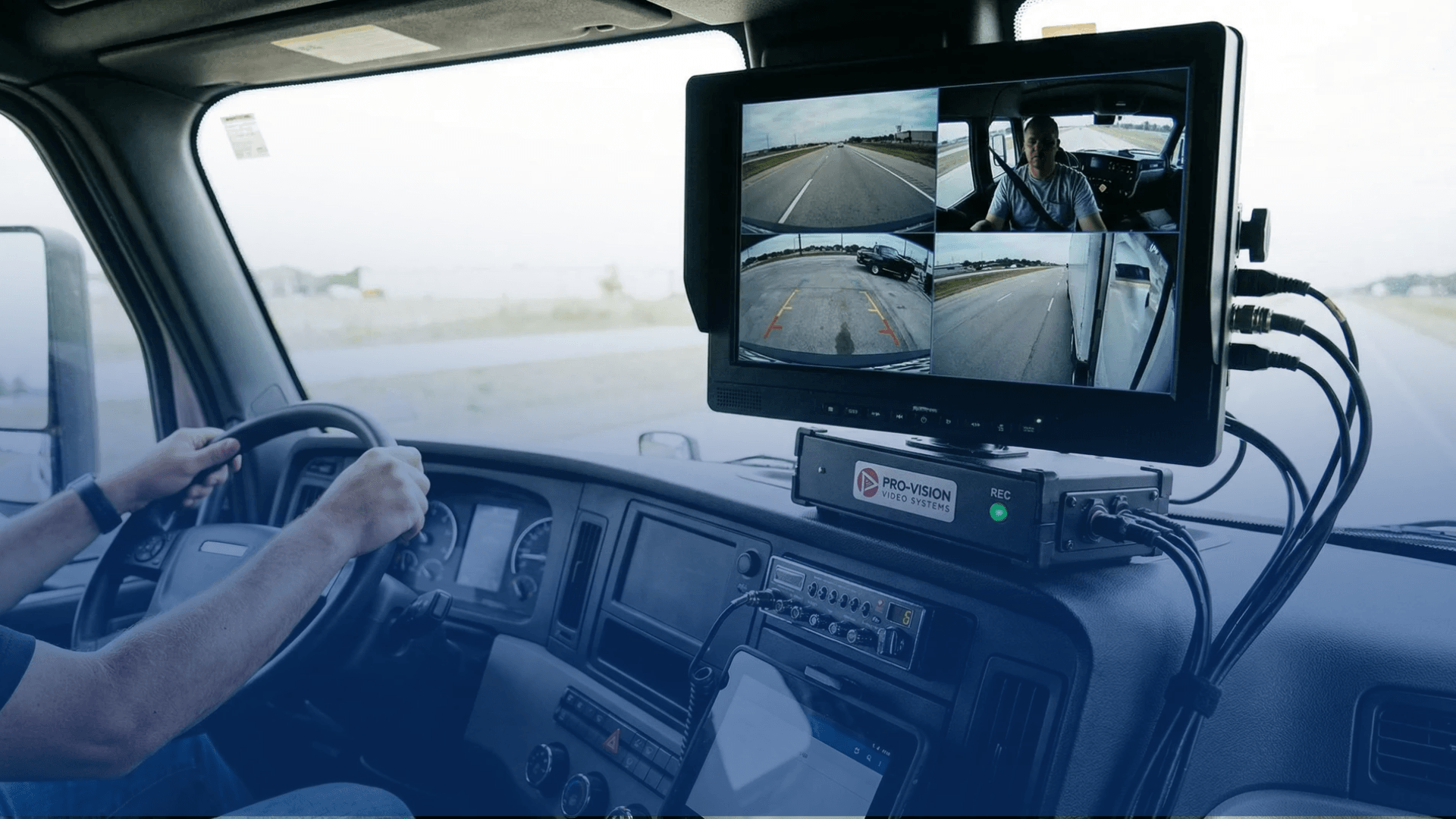
If you’re running a fleet with GPS tracking and fleet management tools in place, you’ve already made a strong operational investment. You have route visibility. You have driver behavior data. You have a platform that keeps your vehicles accountable and your operations efficient.
That foundation is genuinely valuable — and businesses that have built it are in a far stronger position than those that haven’t.
But strong fleet operators are also realistic ones. They know that when an incident happens — a collision, a disputed delivery, an insurance claim, a passenger complaint — the investigation that follows asks more than their GPS data was designed to answer.
Location data tells you where your vehicle was. Video documentation tells you what happened when it was there.
Both answers matter. And the businesses that have both are significantly better protected.
GPS tracking and fleet management platforms give operators a real-time operational picture that would have been unimaginable a decade ago. Route history. Speed monitoring. Geofencing. Idle time analysis. Driver behavior scoring. Live location tracking across an entire fleet.
For managing day-to-day operations, optimizing routes, reducing fuel costs, and maintaining general driver accountability, these tools deliver measurable results. They are the operational backbone of any well-run fleet.
And in the event of an incident, GPS data plays an important role. Timestamps confirm where a vehicle was. Speed logs establish how fast it was traveling. Route history can show whether a vehicle deviated from its assigned path.
This data is genuinely useful — but in incident investigations, it often needs to be paired with something more.
Your GPS system confirms your vehicle was at the intersection at 10:47 AM, traveling within the speed limit. That’s valuable information. But the insurance investigator also wants to know: what was happening in and around the vehicle at that moment? Who had right of way? Was there a third party involved? What did the scene look like immediately before impact?
Video footage from the vehicle answers those questions directly — and when combined with your GPS data, it creates an incident record that is both factually precise and visually verifiable.
Staged accidents and exaggerated injury claims are a documented risk for commercial fleets operating in high-traffic environments. GPS data can establish that your vehicle was present — but footage is what allows you to challenge the narrative of what happened. When both are available, fraudulent claims are significantly harder to sustain.
Your GPS system confirms the delivery was on time and the route was followed correctly. But the consignee is claiming the cargo arrived damaged and holding your business responsible. Continuous video documentation of the vehicle and its cargo area creates a verifiable record of condition at each stage of the journey — information that GPS data alone cannot provide.
For shuttle operators, corporate transport providers, and passenger fleets, complaints about driver conduct present a particular challenge. Route and speed data can confirm that a vehicle was where it should be and moving appropriately. But in-cabin documentation is what allows a fair, evidence-based review of the incident — protecting both the driver and the business from claims that can’t otherwise be verified.
GPS-based driver scoring captures speed events, harsh braking, and acceleration patterns. This is valuable data. Video documentation adds the visual context that explains what triggered those events — and creates a fuller behavioral record that supports coaching, accountability, and, when necessary, formal action.
The most incident-ready fleet operations are those where operational data and visual documentation work as a unified system.
When an event is flagged — whether through a GPS alert, a driver report, or a third-party claim — your operations team can review both the data and the footage together. The route, the speed, the timestamp, and the video are all part of the same record. Investigations that might otherwise take days or weeks can be resolved in hours.
Insurance providers and legal teams work from evidence. When your business can present both the GPS data and corresponding video documentation of an incident, you are entering that process from a position of strength. Contested claims become resolvable. Fraudulent claims become dismissible. And your business doesn’t absorb costs it shouldn’t have to.
Combining GPS behavior scores with video documentation gives fleet managers a fuller picture of driver conduct. Patterns that appear in the data can be understood in context. Coaching conversations are grounded in a complete record rather than abstracted metrics. And drivers who know their conduct is documented — behaviorally and visually — tend to maintain higher standards consistently.
Fleet management has always been about knowing what’s happening across your operation. GPS tracking extended that knowledge in transformative ways. Video documentation extends it further — into the cabin, around the vehicle, and across the incidents and interactions that data alone cannot capture.
TMS Fleet Vision MDVR, part of the TrackMe Suite offered by Webcast Technologies Inc., is built to work alongside your existing fleet management infrastructure. It layers continuous, multi-angle video documentation over your GPS and operational data — creating a unified incident record that your team can access when it matters.
The system integrates with the TrackMe platform, so your operations team reviews footage alongside GPS data in one place. It operates reliably across demanding commercial conditions, and it is designed for fleets that are already running well and want to make sure they’re fully protected when the unexpected happens.
For businesses that have built a strong GPS foundation, TMS Fleet Vision MDVR is how that foundation becomes incident-ready.
This solution is most relevant for businesses that:
GPS tracking changed what fleet management meant. It brought data, visibility, and control to operations that once ran on approximation and trust.
Video documentation is the next layer of that same evolution — not as a replacement for what GPS delivers, but as the visual verification that makes GPS data complete.
When a claim is filed, a dispute is raised, or an investigation begins, the businesses that can answer every question with evidence — operational and visual — are the ones that resolve situations faster, absorb fewer unjust costs, and maintain the trust of their clients, their insurers, and their drivers.
TMS Fleet Vision MDVR is how more Philippine fleet operators are building that capability.
Ready to make your fleet operation complete? Speak with the TrackMe Suite team at https://www.webcast-inc.com.ph/contact-us/ to learn how TrackMe Suite Fleet Vision MDVR works alongside your current fleet management setup.
This website uses cookies to ensure you get the best experience on our website. Learn more